

Dubai Is Still Writing Its Story — And Pavel Bartov Wants Architecture to Make It Human
Updated: 4 days ago
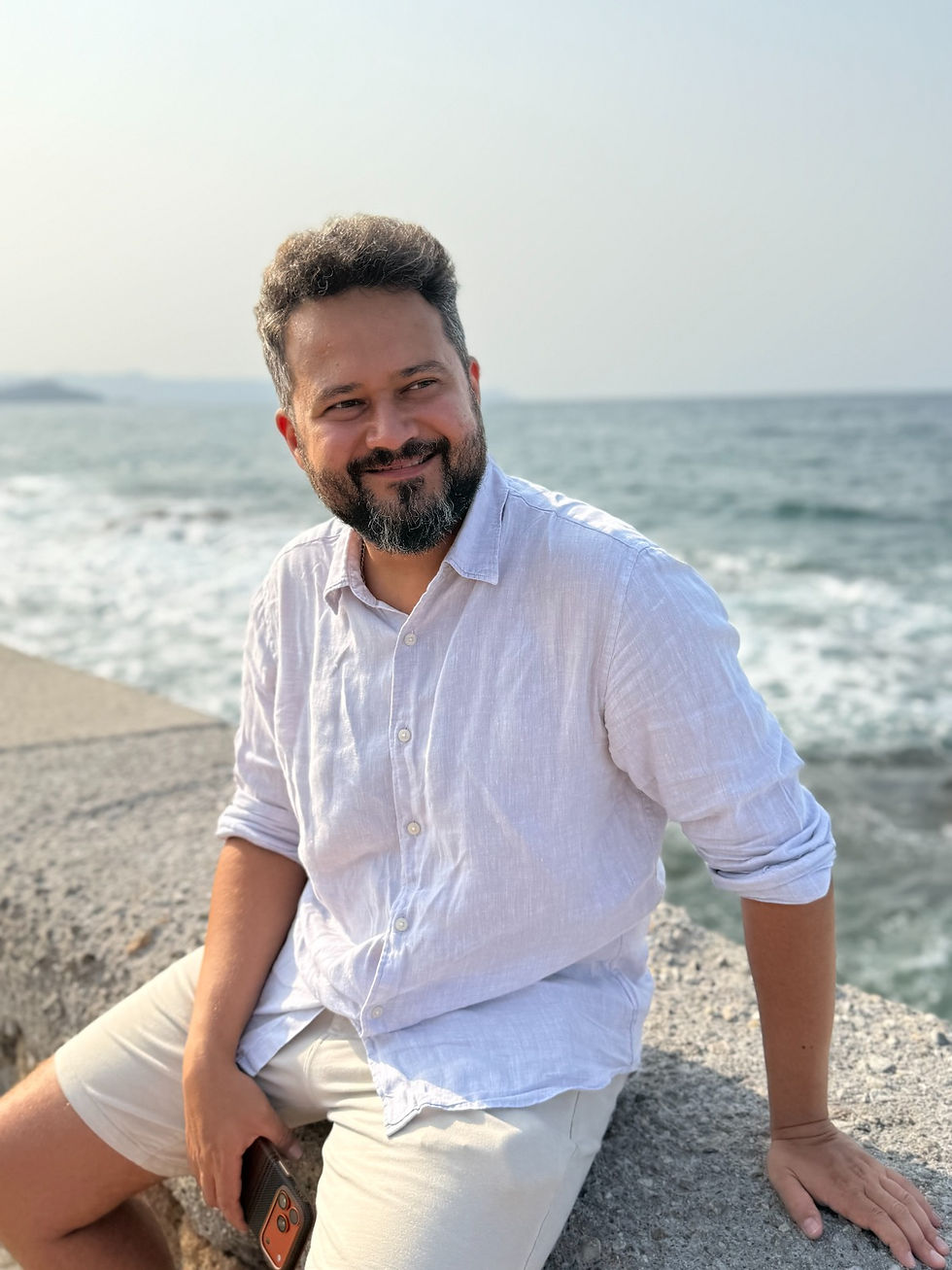
Inside a conversation with Archea Associati Dubai General Manager Pavel Bartov about Italian design, architectural ambition, the changing meaning of luxury, and why the future of one of the world’s most futuristic cities may ultimately become much more human. Dubai has never exactly suffered from a fear of going big. It builds islands. It reshapes coastlines. It sends towers into the clouds and turns architectural ideas that might earn a skeptical raised eyebrow elsewhere into actual pieces of the city. But according to Pavel Bartov, General Manager of Archea Associati Dubai, the most interesting chapter in Dubai’s architectural story may not be about building bigger at all.
It may be about building with greater meaning.
“Dubai’s design identity is actually defined by the fact that it is still not defined,” Bartov says. “For me, that is what makes it so interesting.”
Coming from someone whose architectural life has been deeply shaped by Italy before making Dubai home, the observation carries an interesting contrast. Cities like Rome, Paris or Florence already possess extraordinarily strong identities. An architect working there enters a conversation that began centuries before.
Dubai is different. “Here, we are still writing the first chapters.” And that means architects are not simply responding to a city’s identity. They are participating in its creation.
From “Look at Me” to “How Does
This Make You Feel?”
For a long time, Dubai architecture was synonymous with scale, ambition and the Extraordinary. Bartov doesn’t dismiss that period. Quite the opposite. He believes it established something important: Dubai proved that it could build things few other cities would even Attempt.
“For a long time Dubai was associated with scale, ambition, iconic buildings. The architecture itself here had to say, ‘Look at me. I am here. Look at how cool I am’” But he believes the city is now entering a more mature phase.“The conversation is shifting from ‘How spectacular can we make it?’ to ‘How meaningful can we make it?’”
That shift can increasingly be seen in the attention given to public space, landscape, walkability, culture and human scale, to how people actually experience a place rather than simply how impressive it looks in an Instagram Story.
For one of the most photographed cities in the world, that is a significant evolution. Dubai has already proved that it can build the extraordinary. Bartov believes its next challenge is more subtle and, perhaps, more difficult: building identity. Because identity cannot really be designed overnight.
It emerges from architecture, but also from climate, culture, habits, people, mistakes and Time, all the layers that eventually transform a collection of remarkable buildings into a city.
An Italian Approach—Without Trying to
Make Dubai Italian

Archea Associati was born in Italy, but Bartov is quick to make an important distinction: bringing Italian design sensibility to Dubai does not mean importing an Italian style. In fact, he thinks that would be a mistake.
“For me, the Italian influence is more about how we think about architecture, proportion, materials, detail, public space and especially context. Architecture is never an isolated object.”
So when Bartov and his team work in Dubai, the question is not: How can we make this more Italian?
The question is: What does this place actually need?
“We bring the Italian sensitivity, but not necessarily the Italian aesthetic. You bring the method, not the costume.”
Then comes perhaps the most Italian analogy possible. “We arrive somewhere, discover the local ingredients… and immediately insist that we know exactly what to do with those ingredients.”
He smiles. But behind the joke is a serious architectural position. The goal is not to reproduce Florence, Milan or Rome in the Gulf. It is to apply a certain sensitivity to proportion, materiality, public life and context in order to create something that belongs specifically to Dubai.
“The goal is not to make Italian architecture in Dubai, but to use Italian sensitivity to create architecture that could only belong to Dubai.”
Dubai's Superpower?
Permission to Be Ambitious.
Ask Bartov what makes working in Dubai unusual and his answer is immediate. “Dubai gives architects something quite rare today, permission to be ambitious.” In many established cities, architecture is largely a negotiation with what already exists. History, infrastructure, regulations and an established urban identity all define the boundaries of the conversation.
Dubai frequently asks a very different question: What if we created something that doesn’t exist yet? That changes an architect’s mindset completely. But Bartov is equally clear that freedom is not an excuse for architectural gymnastics.
“Freedom doesn’t mean designing something crazy just because you can.” Experimentation becomes meaningful when it solves something: when it creates a new experience, responds intelligently to climate, changes the way people interact, or proposes a better relationship between a building and the city around it.
Dubai simply creates unusual room for those ideas to be tested. “If you propose something unusual, the first reaction is often, ‘Can we actually do it?’” And in Dubai, the answer has a habit of being yes. For Bartov, however, the real opportunity is no longer simply the freedom to make architecture more spectacular. It is the freedom to rethink what architecture can actually be.
Luxury Is Getting Quieter
Mention Dubai and the word “luxury” inevitably enters the conversation. But Bartov’s definition has surprisingly little to do with price. “I think luxury today is becoming less about cost and more about the quality of experience.” For years, luxury architecture often communicated through accumulation: more marble, more
space, more decoration, more visible evidence of expense.
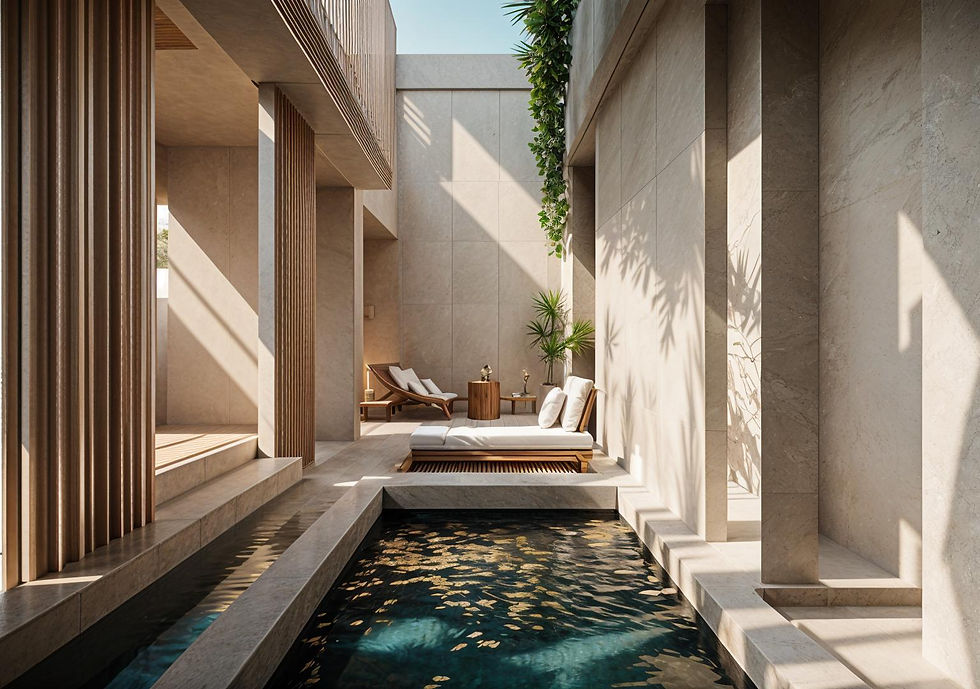
Today, Bartov believes the most sophisticated forms of luxury are becoming quieter.
Space. Natural light. Privacy. Silence. A beautiful view.
Materials that become better with age rather than simply looking expensive on the day they are installed. In that sense, luxury becomes a form of freedom. Freedom from noise. Freedom from visual overload. Freedom from unnecessary things. And then there is perhaps the most valuable luxury of all, something architecture cannot manufacture: time.
“If a space makes you want to slow down, stay longer and notice what is around you, I think that is incredibly valuable.”
His definition ultimately comes down to a feeling. “Luxury is not when architecture tells you how expensive it is. It’s when you simply feel that you don’t want to leave.”
The Future of Dubai Might Be
Surprisingly… Human
When asked what will define Dubai's architecture over the next 10 to 20 years, Bartov points to an unexpected place: Level 3 of Dubai's Museum of the Future. There, inside a building dedicated to imagining tomorrow,
is Al Waha: The Oasis. What fascinates him is the contradiction.

Visitors enter one of the world’s most recognizable symbols of the future only to encounter a space encouraging them to disconnect from technology, slow down, engage their senses and reconnect with themselves.
There is something almost ironic about it. “We spend enormous amounts of energy imagining smarter buildings, AI, automation, new materials… and perhaps the future we are searching for is becoming increasingly human.”
Bartov believes architecture may follow exactly that trajectory. Technology will become enormously sophisticated, but increasingly invisible. And as it disappears into the background, some very old things may become more valuable: nature, silence, shade, walkability, community and physical experience.
In other words, the future may not be defined by having more technology around us. It may be defined by creating better spaces for being human.
Want to Be Iconic? Grab a Piece of Paper.
Dubai already has some of the world's most recognizable buildings, but Bartov rejects the idea that being iconic requires being complicated. During our conversation, he grabbed a piece of paper. A few lines. The Eiffel Tower. A few more. The Burj Khalifa.

The point?
“You can see why it’s iconic. Not technology. You cannot see technology.”
Bartov, who previously taught architecture at the American University in the Emirates, says he would tell students to begin their projects with something much simpler than elaborate renderings.
“Before you start with a project, start with one sentence, or with a couple of sentences, about what exactly you want to do.”
The idea should be clear enough to survive without all the architectural fireworks.
Or, as we joked during the conversation: keep it simple.
“Less is more,” Bartov agreed.
When Luxury Stops Trying So Hard
The same philosophy is influencing the homes and luxury developments clients are requesting. “Luxury is becoming more personal.” Twenty years ago, Bartov says, luxury was something you were supposed to recognize immediately. Today, some of its most desirable qualities are practically invisible.
“Privacy, silence… natural light, community, landscape, well-being, time.” Personalization has changed, too. “It’s no longer about choosing different marble,” he says. “It’s about designing around someone who actually lives.”
How do they work? Exercise? Entertain? Relax? The home starts with the person rather than the price tag. “Luxury properties are becoming less about impressing them and more about protecting the experience of the person who lives there.” And then Bartov sums up the evolution in one line:
“The more luxurious architecture becomes, the less it needs to prove.”
When International Becomes Local
Perhaps nothing defines contemporary Dubai more clearly than the extraordinary mix of people who live there.
Residents, architects, developers, investors and creatives arrive from virtually everywhere, carrying completely different cultural references, and completely different ideas about what a home, a city or even luxury should be.

That mixture can occasionally produce what Bartov jokingly calls “a strange architectural cocktail.” But when it works, something much more interesting happens.“You stop copying individual cultures and start creating a new shared language.” Italian sensitivity to proportion can meet Asian approaches to density. Middle Eastern relationships with privacy and climate can interact with completely international ways of living.
And Dubai is one of the few places where those influences can collide, adapt and evolve with extraordinary speed. Eventually, they stop feeling imported. “Perhaps Dubai’s architectural identity will not come from being purely local or purely international. It will come from becoming a place where the international becomes local.” For a city populated by the world, that may ultimately become one of its most authentic characteristics.
Miami, Meet Dubai
Of course, a conversation with Miami Vibes eventually has to reach Miami. There is only one slight complication. Bartov has never actually been there. His credentials? A childhood influenced by Bad Boys 2 and Miami Vice.
We’ll allow it.
Even from an architect’s perspective at a distance, however, Bartov sees a compelling similarity between Miami and Dubai. “I think Miami and Dubai are similar in one very important way: both cities understand the power of desire.”
Both are waterfront cities. Both are international, optimistic and constantly reinventing themselves. And in both, architecture does more than respond to necessity. It creates a lifestyle people want to become part of. Their relationship with water, however, is fundamentally different.
In Miami, water feels almost like the origin of the city. In Dubai, water itself can become part of the architectural project. “We create islands, canals, new coastlines. We don’t only build next to the waterfront; sometimes we build the waterfront.”Miami also possesses a much longer-established cultural image, shaped in part by its Latin American influence and its relationship with tropical living. Dubai is younger. Its architectural identity remains more open, more experimental and less Predetermined.
The two cities may share an attraction to the horizon. They simply approach it from very different histories.
Still Writing the First Chapter
Dubai’s architectural story is nowhere near finished. That is precisely what excites Bartov. Its future will undoubtedly still contain extraordinary towers, ambitious developments, new technology and engineering achievements
capable of making the rest of the world wonder how they managed to build them.
But its more important evolution may happen much closer to the ground. In the places where people walk. Where they meet. Where children play. Where landscape provides shade. Where technology quietly disappears into the background.
Where luxury no longer needs to announce itself. And where architecture gives people a
reason to put their phones down and stay a little longer.
Dubai has already proved that it can build the extraordinary. Its next challenge may be more difficult, and ultimately more important. To transform extraordinary architecture into an extraordinary city. Perhaps the future of Dubai
will not be more futuristic at all. Perhaps it will simply be more human.


Comments